~ Delta Poetry Review ~
Nicole Cooley, Featured Poet
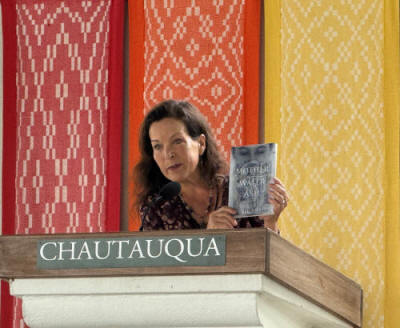 Nicole
Cooley
grew up in New Orleans, Louisiana, and has published seven
collections of poems. Her most recent book is the collection of
poetry Mother Water Ash (Louisiana University Press, July 2024), as
well as the two poetry collections, Girl after Girl after Girl
(Louisiana State University Press, 2017) and Of Marriage (Alice
James Books, 2018). She has published four other collections of
poems, Breach, Milk Dress, The Afflicted Girls, and
Resurrection, as
well as a novel, two chapbooks, and a collaborative artist’s book.
Her next book is the forthcoming poetry collection, Trash, which
will appear with Alice James Books in 2027.
Nicole
Cooley
grew up in New Orleans, Louisiana, and has published seven
collections of poems. Her most recent book is the collection of
poetry Mother Water Ash (Louisiana University Press, July 2024), as
well as the two poetry collections, Girl after Girl after Girl
(Louisiana State University Press, 2017) and Of Marriage (Alice
James Books, 2018). She has published four other collections of
poems, Breach, Milk Dress, The Afflicted Girls, and
Resurrection, as
well as a novel, two chapbooks, and a collaborative artist’s book.
Her next book is the forthcoming poetry collection, Trash, which
will appear with Alice James Books in 2027.
Her awards include the Walt Whitman Award from the Academy of
American Poets, a Discovery/The Nation Award, an NEA, a Creative
Artists fellowship from The American Antiquarian Society, the Emily
Dickinson Award from the Poetry Society of America, and a New Jersey
Arts Council Grant.
Currently, she is a professor in the MFA Program in Creative Writing
and Literary Translation and the English Department at Queens
College—City University of New York, where she also directs the
college-wide reading series Writers at Queens. She lives in New
Jersey with her family.
Mother Water Ash
Mother gone to ash
river
gone to drowned
I don’t live here anymore
as my friends remind
Now I walk the edge of the Grand Central Parkway
Flushing Meadows Park
world’s fair gone dark
what is ashed and drowned
what is abandoned
Mother gone
drowned
in her body the night
she died alone in New
Orleans
ashed her cigarette
then left us did I go dark when the N train
lost power
on my way home
while
the burning threaded through
my baby’s hair
city
doused in ash
impossible
to keep the outside out
River
Road beside my parents’ house
leads to
Cancer Alley
Mother
gone but once with her
I drove through the
drowned city
two months after
the storm
yellowed
grass
houses gone
the road
a slur of empty
is it any wonder I’ve followed her
advice
to subtract myself
good daughter always
till I’m not
did I go dark when she
left me when
will my daughters
while my mother’s mouth is
all slick black feathers
From Mother
Water Ash (2024), Louisiana State
University Press
[Once the coastline spoke: I plan to disappear
and tell you nothing.
Once the coastline spoke: I
plan to disappear and tell you nothing.
Geographic body, etched on a map.
Count the houses where families live,
where a river splinters, saltwater
surges
through a channel built for ships
and oil, dredged and leveed,
children die. To myself, I spoke:
you need to be less
daughter, you need
to go home to your own
daughters,
to be a mother, to stop
walking the Mississippi’s edge. But the Gulf
is burning, marshes disappearing,
sidewalk buckling
like a choking throat. The
coastline advises:
Count my waves. Count the days
your mother
has been gone. Count
the hurricanes, the floods,
the times the water unspooled
and didn’t drown the town.
From Mother
Water Ash (2024), Louisiana State
University Press
Sixteen Years to the Day Another Hurricane
Reverses
the Mississippi’s course
my
father waits in our house
beside the river
and
I dream my mother
drowning
water closing over her
head
in my dreams she is always
dying
in the too warm Gulf
then
pricked alive again
fairy tale spindle
my friends and I text each other
to describe dreams
in which our mothers
ask us why they’re dead
New Orleans is the place
around which I uselessly
orbit after
Katrina typing
my mother’s name
Missing
Person Jacki Cooley
into search engines
sixteen
years ago my daughters asked
what is a hurricane’s eye
what
can it see
then my mother was alive
refusing
to leave the city
now I text my father
how
high is the water
are there tornadoes
phone and electric out
I
wish for a slick of river
to spare our house
while
in a new dream about my mother
she thrashes to the
Gulf’s sand floor
where
she can’t
burn or come apart
From Mother
Water Ash (2024), Louisiana State
University Press
Trash Definition
Trash
and
garbage:
not the same. Nor is offal.
Nor is sewage.
See my childhood home, between a highway and a
river strewn with Styrofoam.
See separate
the dry: paper, wood, bottles. Garbage
is wet organic matter.
See 2020. Discarded masks, gloves on the
sidewalk. We’re not to touch anything now.
See construction debris, ash, street sweepings.
Katrina’s aftermath, houses waterlined,
furniture dragged to the sidewalk.
Slop.
Manure.
Or the word
filth which I
have always found beautiful.
We are the world’s most wasteful nation.
See the too hot Mississippi run with chemicals.
Gowanus Canal scattered with cans.
Save
and discard.
Burn or
bury.
Trash is our best export. After oil.
Microplastics.
Nanoplastics. Nurdles
lodged in our bodies.
See 2020. Daughters disinfecting groceries,
pitching wipes in a bucket.
See
miasma, also
much too lovely.
Discard or save? Who will decide?
Trash not trash until we name it so.
Trashy, worthless first attested 1620—
At the river E and I
smoke my mother’s cigarettes
rope
swing barge
our
trusted landscape.
It’s the morning after we
watch The Day After
movie we were told not to see alone.
We don’t discuss it.
Are two girls not safe alone at the edge of a
river?
How to think about the
word rot,
I might consider much later.
Let’s go back and imagine bodies on fire,
melting, the world gone nuclear.
Or the sky above the Mississippi, waxy, color of
turned milk.
Or also the river, slick with green and fever
bright.
Childhood for us was a flicker, a sting? Not a
melting.
Gone nuclear—is this a chance to be very angry?
Seep and leak.
Are two girls not safe?
How the Cold War starts and continues.
Meanwhile what would it
mean to be trashy:
Too much makeup? Dirty hair? Splintered fingernails?
What would it mean to be radioactive?
Gone nuclear?
Yes once again, how a
woman is turned trash
by virtue of a short skirt.
At the edge.
How we tally
how
in the movie we learn about body counts
radiation bomb blooming
over and over in slow
motion we
are reckless girls who know the world is ending
How we are girls ready for fall-out and no
shelter
We are girls who don’t trust ourselves because
we have been taught not to.
How my high school teacher made me read
the first paragraph of
Lolita
out loud to him alone in a dark room.
Leak.
Tally.
Count.
How many years till the end of the earth.
A bomb blooming.
Why would we trust? And who?
My teacher? Our mothers?
E and I blow smoke rings, climb the levee’s
edge, dizzy with heat,
and should we not love the easy promise
of the world’s end
we half-believe in?
Crossing River Road, over the levee, to the
water’s edge.
Here is a tree, storm-felled, here a stained
mattress with roses.
As always, when I’m home I walk off my restless
sadness, my mother-missing.
Recliner lodged in mud. Sheet of shattered
glass.
The river crosses ten states, ends downstream of
New Orleans. The deepest spot of
At the river’s margin—
Paddlefish. Bluegill. Shovelnose Sturgeon.
Shredded roof shingles. Bottle of Fireball.
Crape Myrtle. Pokeweed.
I imagine dropping my body into the cold dark
water in Algiers, then finding
Fork crushed in dirt. Pair of orange earbuds.
I tell myself I walk the levee because the river
sharpens the world, river that is drift.
River a corridor for migratory birds.
Yet on my walk back to my father’s house
switchgrass flashes gold.
| Archive | Submissions | About | News |